Case Taking Made Easy: Hahnemann’s Guidelines
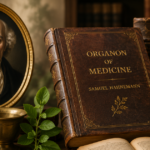
Case taking is the foundation of homoeopathic practice and the first step in selecting the appropriate remedy. In the Organon of Medicine, Dr Samuel Hahnemann explains that successful treatment depends on obtaining a complete, accurate, and individualized picture of the patient’s disease. Between Aphorisms 83 and 103, he describes the principles of effective case taking, including the physician’s qualities, methods of history taking, observation of the patient, evaluation of acute and chronic diseases, and the approach to epidemic and sporadic diseases. By carefully listening, observing, and recording every characteristic symptom without prejudice, the physician can understand the totality of symptoms and arrive at the most appropriate homoeopathic remedy.
Prerequisites for Case Taking (Aphorism 83)
Case taking is the process of obtaining the complete and individualized picture of the patient’s disease. According to Hahnemann, the physician requires four essential qualities: 1) Freedom from prejudice, 2) Sound senses, 3) Attention in observing and 4) Fidelity in tracing the disease picture.
These qualities can be developed through open-minded listening, careful observation, analytical thinking, accurate documentation, and professional honesty.
History Taking (Aphorism 84–89)
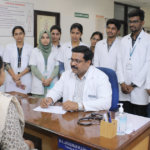
History taking begins by allowing the patient to narrate the complaints in his own words without interruption. The physician should accurately record the patient’s exact expressions and note observations made by relatives or attendants. Each symptom should be written separately, and after free narration, detailed questioning should clarify the location, sensation, duration, time, and modalities of every symptom. Leading questions must be avoided, while general questions should be used to explore physical, mental, and functional symptoms until a complete disease picture is obtained.
Physician’s Observation (Aphorism 90)
After recording the patient’s history, the physician should independently observe the patient’s appearance, behaviour, mental state, speech, facial expression, posture, skin, pulse, tongue, respiration, and other remarkable physical signs. These observations complement the patient’s narration and help form a complete individualized picture of the disease.
Original Unmodified Picture (Aphorism 91)
Symptoms appearing during medication may represent medicinal effects rather than the original disease. Therefore, whenever possible, unnecessary medicines should be discontinued for a few days before final case taking so that the physician can observe the true and uncontaminated disease picture.
Case Taking in Acute Disease (Aphorism 92)
In rapidly progressing acute diseases, treatment should not be delayed while waiting for medicinal effects to disappear. The physician should evaluate the patient’s present condition, including both the original disease and medicinal influences, and prescribe promptly based on the complete existing disease picture.
Obvious Cause of the Disease (Aphorism 93)
The physician should identify any obvious cause responsible for the disease. Acute diseases may follow recent causes, while chronic diseases may arise from causes acting long before the illness. Careful, tactful questioning may reveal physical, emotional, environmental, or lifestyle-related causes.
General Cause of the Disease (Aphorism 94)
During the investigation of chronic diseases, the physician should carefully assess occupation, daily habits, diet, lifestyle, domestic environment, emotional stress, personal relationships, sleep, exercise, and unhealthy habits. Removing factors that maintain disease promotes recovery.
Case Taking in Chronic Disease (Aphorism 95)
Chronic diseases require detailed and careful investigation. Minute and accessory symptoms should never be neglected because they are often the most characteristic. Patients frequently ignore long-standing complaints, considering them normal, but these symptoms are valuable in selecting the appropriate remedy.
Dispositions of Patients in Case Taking (Aphorism 96–97)
Patients differ in the way they describe their complaints. Hypochondriacal and highly sensitive patients often exaggerate symptoms, whereas others may omit important complaints because of modesty, laziness, or inability to express themselves clearly. The physician must carefully interpret every statement and assess the true significance of the symptoms.
Demands of Case Taking (Aphorism 98)
The physician should rely primarily on the patient’s own description of symptoms while carefully verifying the complete disease picture. Successful case taking requires circumspection, tact, knowledge of human nature, caution during questioning, and great patience, particularly in chronic diseases.
Case Taking in Acute Disease (Aphorism 99)
Case taking in acute diseases is comparatively easy because symptoms are recent, fresh in the patient’s memory, and usually described spontaneously. The physician therefore requires less effort to obtain the complete symptom picture.
Case Taking in Epidemic and Sporadic Disease (Aphorism 100–103)
Every epidemic or sporadic disease should be investigated independently without relying on its name or previous outbreaks. The complete disease picture cannot be obtained from a single patient; instead, several cases should be studied to identify common and characteristic symptoms. This collective symptom picture helps determine the appropriate Genus Epidemicus. Similarly, chronic miasmatic diseases require observation of many patients because each patient exhibits only a part of the total disease picture. A complete collective understanding of symptoms is essential for selecting the appropriate homoeopathic remedy.
Conclusion
Case taking is the cornerstone of successful homoeopathic practice. As explained by Dr Samuel Hahnemann in Aphorisms 83–103 of the Organon of Medicine, a physician must obtain a complete, accurate, and individualized picture of the patient through careful listening, systematic questioning, keen observation, and faithful recording of symptoms. The physician should avoid prejudice, recognize the differences in patients’ dispositions, identify the causes of disease, and apply appropriate methods for acute, chronic, epidemic, and sporadic diseases. By following these principles, the totality of symptoms can be established, enabling the selection of the most suitable homoeopathic remedy and ensuring rational, individualized patient care.